
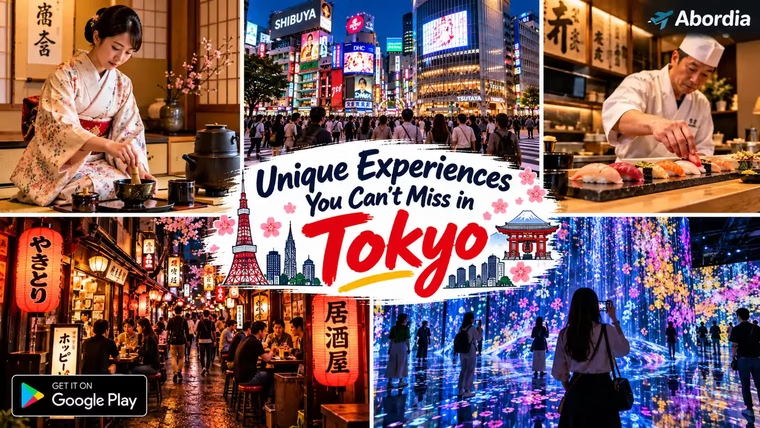
Tokyo has plenty of famous sights. Shibuya Crossing, Senso-ji, and the Skytree are all worth your time. But ask people what they remember most after a trip, and the answer is usually smaller. A cup of whisked green tea. A bar with six stools. A quiet old street where a cat naps on a doorstep.
This guide is about those moments. A few of them exist in other cities too. A sushi counter isn’t new to Japan, for example. What makes them feel different in Tokyo is the care, the scale, and the number of choices. So when we say ‘you can’t do this anywhere else’, we mean the experience feels uniquely Tokyo.
Below you’ll find 20 experiences, ideas by traveler type and budget, and a 3-day plan. If you still need the big sights, our list of the Best Things to do in Tokyo covers them. This article is for what comes after.
1. Join a Traditional Tea Ceremony
A tea ceremony (chado) is a slow, quiet ritual. The host whisks powdered matcha in front of you, and every movement has a purpose. You’ll usually get a small sweet first. Eat it, then drink the tea in a few sips.
The host will show you how to hold and turn the bowl, so you don’t need to study first. Most Tokyo sessions run 30 to 60 minutes, and many are held in English. Prices vary a lot, so check what’s included. If sitting on your knees is hard, ask for a chair.
Why it stands out: you take part in the hospitality, instead of just looking at an old building.
2. Explore a Tiny Izakaya Alley
Some of Tokyo’s best evenings happen in lanes you can almost touch both sides of. Omoide Yokocho and Golden Gai in Shinjuku are the best known. Nonbei Yokocho in Shibuya is smaller and calmer.
Bars here seat five to ten people. Order a drink, point at small plates, and chat with whoever is next to you. Many places charge a seat fee, usually shown on a small sign. Cash is safer. If a door looks closed to visitors, move on without fuss.
3. Try a Counter-Style Sushi Meal
At a sushi counter, the chef makes each piece in front of you and hands it over right away. You taste fish that changes with the season. You can ask what’s good today.
Eat each piece soon after it arrives. Hands are fine. Dip the fish side, not the rice, in soy sauce, and skip mixing wasabi into the dish. Good counters take reservations, often days or weeks ahead. Lunch sets cost far less than dinner. Conveyor-belt and standing sushi bars are cheaper ways to try the same idea.
4. Visit a Themed Café
Tokyo has cafés built around anime, characters, retro games, cats and even ninjas. The fun is in the details: the menu, the decor, and the staff play along.
These places open and close often. Check that a café is still running and whether you need a booking. Many have time limits and a minimum order. If you choose an animal café, pick one that looks after its animals well, and leave if they seem stressed.
5. Spend a Morning in a Traditional Neighborhood
Yanaka is one of the best places to see an older side of the city. Many low wooden buildings survived here, and the main street, Yanaka Ginza, is full of small food stalls. Temples and a large old cemetery sit nearby.
Kagurazaka is different. Its stone-paved side lanes feel quiet and a bit French, thanks to the many restaurants run by French chefs. Go in the late afternoon, then stay for dinner. Wear good shoes, because you’ll walk more than you expect.
6. Sleep in a Capsule Hotel
You don’t need to stay in one for your whole trip. One night is enough to get it. You get a small sleeping pod with a curtain or door, a light, a power outlet, and sometimes a TV. Bathrooms and lockers are shared, and many hotels split floors by gender.
Expect tight space and thin walls, so bring earplugs. Large bags often won’t fit in the pod, so use the locker. If you want help choosing a normal hotel for the rest of the trip, read our guide to the Best Places to stay in Tokyo.
7. Soak in a Sento (Public Bath)
A sento is a neighborhood bathhouse, and locals still use them. It’s cheap, usually under ¥1,000, and a good look at daily life.
The rules matter. Leave shoes in the locker. Wash your whole body at the washing station before you enter the tub. Keep your small towel out of the water and tie up long hair. No swimsuits. Bring your own towel and soap, or buy them at the front desk. Rules about tattoos differ from place to place, so check before you go.
8. See Akihabara After Dark
Akihabara isn’t only about electronics. At night, the streets glow with signs, and the arcades fill up. You can play rhythm games, hunt for retro consoles, and browse floors of anime goods.
Many shops close around 8 to 10 pm, but arcades and cafés stay open later. Arcades are loud, and some have smoking areas, so look around before you commit. Bring ¥100 coins. Don’t take photos of other players without asking.
9. Take a Japanese Cooking Class
Cooking classes teach you a skill you can use back home. Popular topics are sushi, ramen, gyoza, wagashi (Japanese sweets), and home-style meals. Classes last two to three hours and end with you eating what you made.
Tell the school about allergies or dietary needs when you book. Small groups are better than big ones, because the teacher can actually help you. This is also a good first step if you’re curious about the dishes in our Tokyo food guide.
10. Make Your Own Souvenir
A workshop gives you something better than a fridge magnet. Options include pottery, calligraphy, indigo dyeing, and knife-making demos. In Kappabashi, you can even make realistic plastic food, a craft Japan is known for.
Most sessions take one to two hours. Ask before you book if the piece needs time to dry or fire, and whether they ship it. Fragile pieces travel better if the shop wraps them.
11. Sing in a Private Karaoke Room
Japanese karaoke isn’t a stage in a bar. You rent a private room with your friends, usually for an hour or more. A tablet holds a huge song list, including plenty in English. You order food and drinks by phone.
Many chains offer all-you-can-drink plans. Check the time limit and any late-night surcharge. Singing alone is normal too, and some places are built for it.
12. Explore Tokyo’s Retro Side
Beyond Yanaka, look at Nezu and Sendagi, which sit next to it. Nezu Shrine is lovely, and the lanes around it are calm. Shimokitazawa is the place for vintage clothes and small record shops. Koenji has a similar feel.
Try a kissaten, an old-style coffee shop. Think dark wood, siphon coffee, and thick toast. You’ll see people reading newspapers there as they did decades ago.
13. Wander a Depachika Food Hall
The basement floors of big department stores are full of food. Isetan in Shinjuku, Mitsukoshi in Ginza and Takashimaya are good starting points. You’ll find bento boxes, croquettes, pickles, cakes, and seasonal sweets, all neatly wrapped.
Go in the evening, when prices often drop on fresh items. It’s also a smart place to buy gifts, since the packaging is already done for you.
14. Walk Through a Digital Art Space
Tokyo is home to large immersive art spaces, with teamLab the best known. Rooms of light and mirrors react as you move. One of its sites even has you wade through shallow water.
Locations, ticket rules, and opening dates change, so check the official site before you plan. Tickets are timed and can sell out. Wear clothes you can roll up and expect to go barefoot in some rooms.
15. Ride the Trains Like a Local
The trains are part of the experience. Load a Suica or Pasmo card onto your phone or buy a physical one, then tap through every gate. Google Maps handles routes well, and station signs use English.
Avoid the rush from about 7:30 to 9:30 am if you can. Keep your voice low and skip phone calls. Pick up an ekiben (station bento) for a snack. For something different, ride the Toden Arakawa Line, the last streetcar line still running in Tokyo.
16. Eat Your Way Through a Konbini
Convenience stores like 7-Eleven, Lawson, and FamilyMart are far better than their name suggests. Try an onigiri, an egg sandwich, a hot chicken snack from the counter, or a seasonal dessert. Many stores have a small eating area.
The selection changes with the season, so there’s always something new. 7-Eleven ATMs usually accept foreign cards, which makes them handy for cash.
17. Hunt for Vending Machines
You can find a vending machine on almost any street. Hot and cold drinks sit side by side. Red labels mean hot, blue means cold. Some machines sell soup, ice cream, or snacks, and capsule-toy machines (gachapon) are everywhere.
Keep coins handy and drink next to the machine, since public bins are rare. Treat it as a small street game, and take photos without blocking the path.
18. Watch the City Light Up at Night
Tokyo at night is a sea of lights that goes on to the horizon. The Tokyo Metropolitan Government Building in Shinjuku has free observation decks. Tokyo Skytree and Shibuya Sky cost money but give wider views. Tokyo Tower looks great from below and from nearby streets.
Arrive 30 minutes before sunset to see the shift from day to night. On clear winter days you may even spot Mt. Fuji. Check opening hours first.
19. Take a Neighborhood Food Walk
Pick one neighborhood and stay there all day. Start with a local breakfast, browse the shops, have lunch, stop for a coffee, and finish at an izakaya.
Yanaka, Kichijoji, and the Tsukiji outer market area work well. You can join a guided food tour or go on your own. If you aren’t sure what to order, our guide to Japanese Foods to Try in Tokyo helps you read a menu.
20. Explore Without a Fixed Route
Save a half day with no plan. Get off at a station you’ve never heard of. Walk through a local shopping street, sit in a small park, buy something from an independent shop, and stop at a café that has no English sign.
This is how many travelers find their favorite memory. It’s also the best answer to ‘what are the non-touristy things to do in Tokyo?’ You don’t need a list. You need time.
Best Unique Experiences by Traveler
- For couples: a tea ceremony, a night view, a counter sushi dinner, a cooking class, a small izakaya, and a slow food walk.
- For solo travelers: Tokyo is easy to do alone. Try a cooking class, a food tour, a sento, a photo walk, karaoke, or a quiet café. Counter seats suit one person well.
- For families: themed cafés, digital art spaces, craft workshops, arcades and a depachika picnic. Skip late izakayas and check age rules for karaoke.
- For photographers: Akihabara at night, Yanaka in the morning, the skyline after sunset and the vending-machine streets.
Unique Tokyo Experiences by Budget
- Free or very cheap: neighborhood walks, vending-machine hunting, local shopping streets, public parks, night photography and the free observation deck in Shinjuku.
- Mid-range: cooking classes, food tours, tea experiences and craft workshops.
- Splurge: a high-end sushi counter, a private cultural session, a luxury ryokan stay or a premium observation experience.
A 3-Day Tokyo Experience Plan
Day 1: Traditional Tokyo. Start in Asakusa and visit Senso-ji early, before the crowds. Walk to a quieter old neighborhood, join a tea session in the afternoon, then end with dinner at an izakaya.
Day 2: Modern Tokyo. Begin in Shibuya, walk to Harajuku, then spend the afternoon at a digital art space. Stop at a themed café, then watch the sunset and the lights from an observation deck.
Day 3: Local Tokyo. Spend the morning in Yanaka. Take a cooking class at midday, wander nearby streets in the afternoon, and finish with a karaoke night.
Planning Your Trip and Booking Flights
Book your flight first, then book timed experiences such as tea sessions, cooking classes, and teamLab tickets. That way you won’t lose a booking if dates change.
Most routes from Bangladesh connect through another city, so compare layover lengths as well as price. Haneda is closer to central Tokyo than Narita, which saves time and money on the ride in. You can compare options on our page for cheap flight tickets from Dhaka to Tokyo.
Check visa rules with the Japanese embassy well before you buy. Spring and autumn are lovely but busy. Golden Week (late April to early May) and Obon (mid-August) are the most crowded, so avoid them if you can. Carry some cash, because many small places don’t take cards.
Frequently Asked Questions
A tea ceremony, a sento visit, a counter sushi meal, a night in a capsule hotel, and an evening in a tiny izakaya alley are the top ones. Each feels very Tokyo.
Try a capsule hotel, make plastic food in Kappabashi, shop in a depachika, or hunt for vending machines. They’re simple, cheap, and memorable.
Spend time in Yanaka, Kagurazaka, or Shimokitazawa, visit a sento, sit in a kissaten, or just wander a local shopping street.
A tea ceremony is the most direct one. A sento visit is a close second because you see everyday life.
Eat at a sushi counter, ride the trains with an IC card, see the city at night, and stroll through an old neighborhood.
Tea ceremony, night views, a cooking class, a small izakaya, and a food walk are all relaxed and easy to share.
Mix one big sight with one small experience each day. A tea session, a food hall visit, and a night view are a good start.
Counter sushi, an izakaya, a depachika, a konbini snack run, and a neighborhood food walk.
Take a class, make a craft, sing karaoke, soak in a bath, play an arcade game, or cook a meal.
