
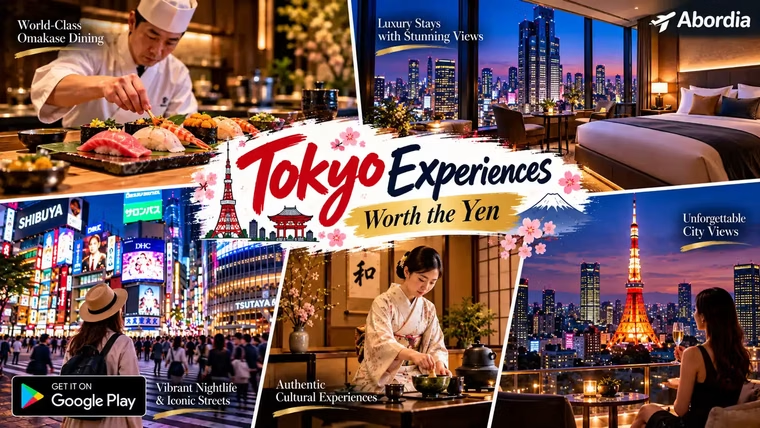
You can do Tokyo on a small budget. Ramen counters are cheap, shrines are free, and the trains go almost everywhere. But a few things in this city are worth real money. Spend a little, or a lot, in the right places and an ordinary trip turns into one you talk about for years.
This guide is for travelers who have some room in the budget and want to spend it well. For each experience, you’ll see what you get, who it suits, how long it takes, and whether it’s worth the splurge. Where a cheaper option gets you most of the way there, I say so.
Still building your itinerary? Start with our guide to the best things to do in Tokyo, then come back here to pick your splurges.
Book Your Flights Before You Book Your Splurges
Some of the best experiences in Tokyo sell out weeks ahead. Do not pay for a non-refundable dinner or tour before your flights are confirmed.
If you’re flying from Bangladesh, compare fares and layover times first. Our page on cheap flight tickets from Dhaka to Tokyo is a good place to start. A few things to check:
- Airport: Haneda is much closer to central Tokyo than Narita. A cheaper fare into Narita can cost you extra time and train money on arrival.
- Visa: Check Japan’s visa rules for your passport early. Processing takes time.
- Season: Cherry blossom season (late March to early April) and autumn leaves (November) push up flight and hotel prices. Book early or travel just outside those weeks.
- First night: After a long flight, skip the big dinner. Save your best reservation for day two or three.
1. Treat Yourself to an Omakase Meal
Omakase means “I leave it to you.” You don’t order from a menu. The chef decides the courses, usually sushi, one piece at a time, based on what’s best that week.
Most omakase counters seat just eight to ten people. You watch the chef work, ask questions, and get each piece the moment it’s ready. That’s very different from ordering a sushi set at a regular restaurant.
A high price doesn’t guarantee a great meal. Read recent reviews, check the chef’s reputation, and look for restaurants that handle English bookings well. Tell them about allergies or foods you avoid when you reserve. If you want to know what else to eat while you’re in town, see these Japanese foods to try in Tokyo.
- Worth it? ★★★★★
- Best for: Food lovers and special occasions
- Time: 1 to 2 hours
- Save money: Book lunch instead of dinner. Many counters charge noticeably less at midday.
2. Stay in a Luxury Tokyo Hotel
Tokyo hotel rooms are small. That’s the first thing a luxury hotel fixes. You also pay for service, skyline views, quiet, good breakfasts, and often a spa.
Location matters just as much. A hotel next to a major station saves you a lot of walking, transfers, and tired evenings. You don’t need to book your whole trip this way. One or two nights at a top hotel, at the start or end of your trip, often gives you the best value.
Not sure which neighborhood suits you? Our list of the best places to stay in Tokyo covers areas and hotel types for different budgets.
- Worth it? ★★★★
- Best for: Couples, honeymooners, anyone celebrating
- Time: 1 to 2 nights
- Save money: Stay in a mid-range hotel near a major station, then have afternoon tea or a drink at a luxury hotel bar.
3. See Tokyo’s Skyline From a Premium Viewpoint
Tokyo is huge, and the best way to understand it is from above. You have several choices:
- Tokyo Skytree: The tallest tower in Japan, with decks at 350 and 450 meters.
- Tokyo Tower: Smaller and older, but it gives you the classic red-tower view.
- Rooftop and hotel bars: You pay for a drink or a cover charge, and you get a seat and a good atmosphere.
- Free option: The observation decks at the Tokyo Metropolitan Government Building in Shinjuku cost nothing.
My advice: do one paid view and one free view. Go close to sunset so you see the city in daylight, then watch it light up. Check the weather the same day. On clear winter days, you can sometimes see Mount Fuji. If you’re searching for the best places to see Tokyo at night, this is the place to start.
- Worth it? ★★★★
- Best for: First-time visitors
- Time: 1 to 2 hours
- Save money: Use the free Shinjuku observatories.
4. Book a Private Food or Neighborhood Tour
Tokyo is easy to move around, but it’s hard to read. Many of the best small restaurants have no English menu, no photos, and no obvious door. A good local guide solves that.
On a private tour, you get a person who can explain what you’re eating, take you to places you’d walk past, and adjust the route to your pace. That matters most on a first visit, or when you only have a few days.
Before you book, check three things: whether food is included in the price, how big the group is, and whether the guide has recent, detailed reviews.
- Worth it? ★★★★★
- Best for: First-time visitors and short trips
- Time: 3 to 4 hours
- Save money: Join a small group tour, or walk the Yanaka and Tsukiji outer market areas on your own.
5. Spend an Evening at a High-End Japanese Restaurant
This isn’t only about Michelin stars. At the top level, you’re paying for the whole evening: the food, the service, how each dish is presented, and the room you sit in.
Good choices include kaiseki (a multi-course seasonal meal), a tempura counter, teppanyaki, or a wagyu restaurant. Each one feels different.
Book early, read the dress code, and check the cancellation policy. Some places charge a fee if you cancel late. Tipping is not expected in Japan.
- Worth it? ★★★★
- Best for: Anniversaries and special occasions
- Time: 2 to 3 hours | Save money: Many top restaurants offer a lunch set that costs much less than dinner.
6. Join a Traditional Tea Ceremony
A tea ceremony is calm, slow, and very different from the rest of Tokyo. A host prepares matcha in front of you, serves it with a small Japanese sweet, and explains the steps and meaning.
The quality varies. Look for small groups and a host who actually talks with you, not a rushed show for a crowd. Several teahouses in Asakusa and in garden settings such as Hamarikyu Gardens offer sessions for visitors.
- Worth it? ★★★★
- Best for: Culture lovers and couples
- Time: 45 to 90 minutes
- Save money: Sit in a garden teahouse for matcha and a sweet without the full ceremony.
7. Take a Japanese Cooking Class
Shopping gives you something to carry home. A cooking class gives you something to keep. You learn to make sushi, ramen, gyoza, or Japanese sweets, then you eat what you made.
Some classes start with a visit to a local market. Others are held in a small home kitchen, which feels more personal. Choose a class with a small group, clear English instruction, and a menu that fits your diet.
- Worth it? ★★★★
- Best for: Food lovers, families, solo travelers
- Time: 2 to 3 hours
- Save money: Choose a shared group class over a private one.
8. Go on a Premium Tokyo Night Tour
Tokyo at night is one of the best parts of the city, and also one of the hardest to do alone. Small izakayas fill up fast, some bars have a cover charge, and many places are tucked up narrow stairs.
A guided evening can combine a skyline view, a food stop, and two or three izakayas or bars. It’s a safe and easy way to see Tokyo nightlife, especially for couples and first-time visitors.
Watch the clock. Trains stop running around midnight, and a late taxi is expensive. Ask your guide how you’ll get back.
- Worth it? ★★★★
- Best for: Couples and first-timers
- Time: 3 to 4 hours
- Save money: Walk Omoide Yokocho in Shinjuku on your own and order a few small plates.
9. Stay One Night in a Ryokan-Style Inn
You don’t have to leave Tokyo to try traditional Japanese hospitality. A ryokan gives you a tatami room, a futon bed, a yukata robe, a set dinner served in your room or a dining space, and often a hot bath.
There are a few ryokan-style options inside the city, from luxury properties to small, family-run inns in areas such as Asakusa. One night is usually enough. If you want more ideas like this, our guide to unique experiences in Tokyo has more.
A few etiquette points: take off your shoes at the entrance, wash before you enter a shared bath, and check the property’s tattoo policy if it applies to you.
- Worth it? ★★★★
- Best for: Couples and travelers who want culture
- Time: 1 night
- Save money: Book a small inn outside the luxury tier, or just try a hotel room with tatami flooring.
10. Take a Private Day Trip From Tokyo
If you only have a few days, a private day trip saves time. A driver or guide handles the transport, the timing, and the decisions, so you spend more time seeing and less time reading train maps.
- Hakone: Hot springs, lake views, and a chance to see Mount Fuji.
- Nikko: Famous shrines and temples set in the forest, about two hours from Tokyo.
- Kamakura: The Great Buddha and coastal temples, roughly an hour away.
- Fuji area: Lakes and mountain views. Weather matters a lot here, so keep your dates flexible.
- Worth it? ★★★★
- Best for: Short trips, families, older travelers
- Time: Full day
- Save money: Go by train. A regional pass such as the Hakone Freepass can reduce costs. Check current details before you buy.
11. Book a Premium Spa or Onsen Session
An onsen is a Japanese hot spring bath. In Tokyo, you can visit onsen-style spas, hotel spas, and bathhouses that use natural spring water. A premium visit adds private baths, massage, and quiet rooms where you can rest.
If you want privacy, look for a private bath you can book by the hour. If you have tattoos, check the policy before you go. Rules differ from place to place.
It’s also a good way to recover. After three days of walking 20,000 steps, a hot bath is more useful than another attraction.
- Worth it? ★★★★
- Best for: Anyone who needs rest
- Time: 2 to 3 hours
- Save money: Visit a neighborhood sento (public bathhouse) for a fraction of the cost.
12. Hire a Private Photographer
Most travel photos of couples or solo travelers are blurry selfies or shots from a stranger. A local photographer solves this and also knows the best spots and the best light.
Popular settings include Shibuya at night, Asakusa in the early morning, quiet streets in Yanaka, and traditional neighborhoods. Before you book, look at the photographer’s portfolio. Ask how many edited photos you’ll get, how fast they deliver, and what happens if it rains.
- Worth it? ★★★★
- Best for: Couples, honeymooners, solo travelers, content creators
- Time: 1 to 2 hours
- Save money: Book a shorter session, or bring a small tripod and use a timer.
13. Explore Premium Shopping in Ginza and Omotesando
Tokyo is a great place to shop, but not because of brand names you can buy anywhere. The real draw is Japanese craft and service: knives, ceramics, stationery, denim, and the food halls in the basements of department stores.
Ginza has the older department stores and high-end brands. Omotesando mixes designer shops with architecture. Shibuya is better for fashion and younger brands. Foreign visitors can often shop tax-free by showing a passport, but Japan is changing how this works, so check the current rule before you go.
- Worth it? ★★★
- Best for: Shoppers and gift buyers
- Time: Half a day
- Save money: Browse department stores and food halls without buying. For kitchenware, try Kappabashi.
14. Try an Anime, Gaming, or Pop Culture Experience
For fans, this can be the highlight of the trip. Options include digital art spaces like teamLab, the Ghibli Museum in Mitaka, arcades in Akihabara, themed cafes, and character stores.
Things change quickly here. Venues move, close, or change their ticket rules. Always check the official website for current dates and prices. Popular places like the Ghibli Museum sell timed tickets in advance, so book as early as you can.
- Worth it? ★★★★ if you’re a fan, lower if you’re not
- Best for: Younger travelers, families, pop culture fans
- Time: 2 to 4 hours
- Save money: Play in Akihabara arcades and try capsule toy machines.
15. Book a Special-Occasion Cruise
A boat dinner on Tokyo Bay is a good fit for a birthday, an anniversary, or a proposal. Options include a traditional yakatabune houseboat dinner or a dinner cruise that passes Rainbow Bridge and the Odaiba waterfront.
This isn’t for everyone. If you’re not celebrating anything, you can skip it. But if you want a private, romantic evening, it’s a strong choice. Book ahead, ask about the menu, and check how the cruise handles bad weather.
- Worth it? ★★★ for most travelers, ★★★★ for a real occasion
- Best for: Couples and celebrations
- Time: 2 to 3 hours
- Save money: Take the Sumida River water bus from Asakusa for a cheap view from the water.
What Is Actually Worth the Money?
Here’s a quick guide if you can’t do everything.
| Experience | Value | Best For |
|---|---|---|
| Omakase | ★★★★★ | Food lovers |
| Private tour | ★★★★★ | First-time visitors |
| Luxury hotel | ★★★★ | Couples |
| Private photography | ★★★★ | Couples and solo travelers |
| Premium spa | ★★★★ | Relaxation |
| Fine dining | ★★★★ | Special occasions |
| Skyline experience | ★★★★ | First-time visitors |
| Tea ceremony | ★★★★ | Culture lovers |
| Private day trip | ★★★★ | Short trips |
| Luxury shopping | ★★★ | Shoppers |
Where Not to Splurge
Spending more isn’t always better. Save your money here:
- Major sights: You rarely need premium tickets to enjoy Senso-ji, Meiji Shrine, or the big parks.
- Getting around: Tokyo’s trains and subways are fast and clean. A rechargeable IC card is enough for most days. Use a taxi only late at night or with heavy bags.
- Convenience store food: Onigiri, egg sandwiches, and hot snacks from stores like 7-Eleven and Lawson are cheap and surprisingly good.
- Walking neighborhoods: Asakusa, Yanaka, and Shibuya are great on foot, and you don’t need a tour for every one.
Tokyo Splurges by Traveler Type
For couples: Pick a fine dining dinner, a photo session, one night in a good hotel, a night view, and maybe a cruise if you’re celebrating.
For food lovers: Start with omakase, add a cooking class, join one food tour, and finish with a fine dining night.
Families: Choose comfort. A private day trip, a well-run tour, and one special attraction usually beat a packed schedule. Skip the late-night experiences.
For solo travelers: Food experiences, a cultural class, a guided tour, a photo session, and a spa day. Tours and classes are also an easy way to meet people.
How Much Should You Budget for Special Experiences?
Prices change too fast to list exact numbers, so think in three groups:
- Moderate splurge: Paid viewpoints, tea ceremonies, cooking classes, and pop culture attractions.
- Big splurge: Omakase, high-end restaurants, private tours, and day trips.
- Once-in-a-trip splurge: A luxury hotel night, a ryokan stay, a private cruise, or a special-occasion experience.
A simple rule: pick one once-in-a-trip splurge, one or two big ones, and a few moderate ones. Check current prices on official websites before you book.
Frequently Asked Questions
Omakase, a private food tour, a night view, a tea ceremony, and a ryokan stay give the most value for most travelers.
Food comes first. A great meal, a guided tour, or a special stay will usually be remembered longer than a shopping bag.
A top hotel, a high-end omakase counter, a private day trip, a spa session, and a special-occasion cruise.
A tea ceremony, a ryokan stay, a night out in the small bars of Shinjuku, and a cooking class are good examples. See more unique experiences in Tokyo.
It can be cheap or expensive. Food and transport are good value. Hotels and high-end dining cost more.
A tea ceremony, an omakase dinner, a day trip to Hakone or Nikko, and a private cruise on the bay.
