
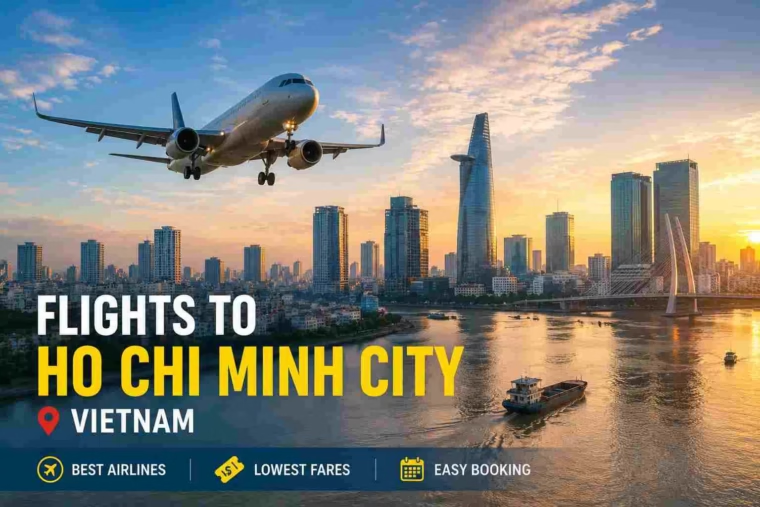
Every travel blog written before this year gets one detail about flying into Ho Chi Minh City wrong: which airport you’ll actually land at.
Tan Son Nhat has handled the city’s air traffic for decades. Starting in December, a second airport enters the picture, and that changes how you should think about booking flights to Ho Chi Minh City Vietnam for the next couple of years.
This guide covers that shift, plus everything else you actually need: which airlines fly the route, when fares drop, what visa you need, and how to get from the tarmac to District 1 without overpaying. It’s checked against what’s true right now, not recycled from an older post.
Why Fly to Ho Chi Minh City
It’s Vietnam’s largest city and its commercial engine, which means more flight options and more competition on fares than almost anywhere else in the country.
It’s also the easiest jumping-off point for the Mekong Delta, Con Dao, and Phu Quoc. If your trip includes more than one Vietnamese destination, Ho Chi Minh City is usually the cheapest place to fly into first.
Street food, coffee culture, and a genuinely low daily budget make it a strong pick even if you’ve never been to Southeast Asia before.
Airlines Serving Ho Chi Minh City
Vietnam Airlines and VietJet Air run the most frequent domestic and regional connections, with Vietnam Airlines offering more international long-haul options directly.
From Europe, Qatar Airways and Emirates connect through Doha and Dubai with a single stop. Singapore Airlines, Thai Airways, EVA Air, and Malaysia Airlines route through their home hubs and tend to add a few hours but often shave money off the fare.
From North America, there’s no nonstop option yet — every routing includes at least one connection, most commonly through Seoul, Tokyo, Taipei, or a Gulf hub.
For a full breakdown of how these carriers compare on baggage, refunds, and comfort, our cheap flight tickets to Vietnam guide covers all of them side by side.
Airport Guide: Tan Son Nhat and the New Long Thanh
Right now, every flight into Ho Chi Minh City lands at Tan Son Nhat International Airport (SGN), about 8km from District 1. It’s compact, often crowded, and one of the busiest airports in Vietnam.
That changes on December 1, when Long Thanh International Airport (LTH) opens roughly 40km east of the city. Long-haul international flights, new routes, and added frequencies begin shifting there first. Tan Son Nhat keeps handling regional and domestic flights for the foreseeable future, with a fuller transition.
For bookings made before December, you’ll almost certainly still land at Tan Son Nhat. For anything booked early, check your ticket carefully; the airport code matters more than it used to.
Pro Tip: Don’t trust a map or an old blog post to tell you which airport you’re flying into. Confirm the airport code (SGN or LTH) printed on your actual ticket before arranging any ground transport.
Best Months to Book Flights to Ho Chi Minh City Vietnam
The dry season, December through April, draws the most travelers and the highest fares, especially in the two weeks around Tet, Vietnam’s Lunar New Year.
May through August is shoulder season: still warm, occasional rain, and noticeably lower prices from most airlines.
September through November brings the wet season in the south, which keeps demand and fares down further, even though showers are usually short and don’t ruin a trip.
For booking timing rather than travel timing, six to ten weeks ahead tends to land the best regional fares, while long-haul routes from Europe or North America are usually cheapest three to five months out.
Cheapest Routes and Layovers Worth Considering
A direct flight isn’t always the cheapest one, and on this route it’s rarely even an option outside Asia.
Routing through Bangkok, Kuala Lumpur, or Singapore usually beats a Gulf connection on price for travelers already in Asia or Australia. From Europe, a Gulf carrier connection often undercuts flying via Asia, purely because of how competitive the Doha and Dubai hubs are on this corridor.
If you’re departing from Germany or nearby, it’s worth comparing both approaches directly; our Vietnam to Frankfurt flight page lines up the routing options for that specific corridor.
Travelers from the US East Coast face a similar decision between an Atlantic-then-Gulf routing and a Pacific-then-Asia one. Our Vietnam to New York flight page breaks down which tends to run cheaper by season.
West Coast travelers connecting through Asia sometimes find better value flying into Hanoi first and taking a short domestic hop south; our Vietnam to Los Angeles flight page shows how that compares to flying straight into Ho Chi Minh City.
Getting From the Airport Into the City
Grab (Southeast Asia’s rideshare app) is the easiest option at Tan Son Nhat. Pull up the app in the arrivals hall, request a car, and walk to a marked pickup zone.
Metered taxis from Vinasun or Mai Linh are reliable and only slightly more expensive. Stick to those two brands; unmarked “taxis” waiting near the doors are a common overcharge risk.
Public bus routes 109 and 152 run from the airport into the city center for a fraction of the cost, though they take longer and aren’t ideal with heavy luggage.
The city’s metro line does not yet reach the airport; that connection is planned for a future line, not the one currently running.
Where to Stay Near the Airport
If you’re arriving late or catching an early connection, staying in Tan Binh district near Tan Son Nhat cuts the transfer time to almost nothing.
Budget guesthouses in the area typically run well below District 1 prices, while international chain options like ibis Saigon Airport offer a predictable, comfortable stay within a short drive of arrivals.
For a longer stay, District 1 or District 3 puts you closer to restaurants, sights, and nightlife, at the cost of a 20–30 minute ride back to the airport when you leave.
Visa Requirements Before You Fly
Vietnam currently issues e-visas to citizens of every country, valid for 90 days with multiple entries allowed. Applications go through the official government portal, and approval usually takes a few business days.
Around 38–39 countries and territories get visa-free entry instead, with stay lengths ranging from 14 to 45 days depending on nationality; most Western European passport holders get 45 days, while several ASEAN nationalities get 30.
As of April 2026, Tan Son Nhat is piloting a mandatory digital arrival card for all arriving passengers, visa-exempt or not. It has to be submitted online within 72 hours before landing, and you’ll need the QR code confirmation ready for immigration.
Common Mistake to Avoid: Assuming visa-free entry means no paperwork at all. The new digital arrival card applies to visa-exempt travelers too skip it and you can be delayed at immigration even with a valid passport.
Getting Around Once You’re There
Metro Line 1, running between Ben Thanh and Suoi Tien, opened in December 2024 and covers the eastern side of the city, useful for reaching Thao Dien and the university area, less useful for most tourist sights.
Grab remains the most practical way to get around day to day, with fares that are genuinely cheap by Western standards.
District 1 itself is very walkable, and a lot of the city’s best food and coffee spots are only found by wandering rather than following a map.
Top Things to Do in Ho Chi Minh City
Ben Thanh Market is the obvious first stop for souvenirs, street food, and a crash course in local bargaining.
The War Remnants Museum offers a sobering, well-curated look at the Vietnam War from the Vietnamese perspective; plan at least two hours.
A day trip to the Cu Chi Tunnels is one of the most-booked excursions from the city, and most hotels can arrange transport directly.
Bui Vien Street comes alive at night with bars and street vendors, while Landmark 81’s observation deck gives a daytime view over the whole city.
Money-Saving Booking Tips
Setting a fare alert rather than checking prices on this route manually can shift day to day, and an alert catches drops before they disappear.
Search flexible date ranges instead of fixed dates. Shifting a Ho Chi Minh City departure by even two or three days can change the fare by a noticeable margin, especially outside Tet.
Compare across airlines for the same week before booking. On Abordia, checking Vietnam Airlines against a Gulf carrier for the same dates on a long-haul route typically surfaces a real spread, sometimes a few hundred dollars for similar travel times.
Book connecting flights as a single itinerary rather than piecing together separate tickets. If one leg is delayed, an airline-ticketed connection protects you; a self-connected one usually doesn’t.
Pro Tip: Check fares from your phone as well as your laptop. Mobile-only promo fares on this route show up more often than most travelers expect, particularly on budget carriers.
Frequently Asked Questions
Tan Son Nhat International Airport (SGN) handles all flights into Ho Chi Minh City as of mid-year. Long Thanh International Airport (LTH) opens December 1 and will gradually take over long-haul international routes.
Most travelers do. Vietnam offers e-visas to all nationalities for stays up to 90 days, while around 38–39 countries qualify for visa-free entry of 14 to 45 days depending on nationality.
September through November tends to have the lowest fares, since it falls in the wet season with lighter demand. Avoid the two weeks around Tet, which is consistently the most expensive travel window.
Grab or a metered Vinasun or Mai Linh taxi are the easiest options, usually taking 20–30 minutes depending on traffic. Buses 109 and 152 run the same route for less money if you’re not in a hurry.
Yes, it’s generally considered safe with normal city-travel precautions, and daily costs for food, transport, and budget accommodation run well below most Western cities.
Check current routes and fares on our Vietnam flight deals hub; it’s kept current with both airports and every airline covered in this guide, so you’re comparing today’s numbers, not last year’s.
