
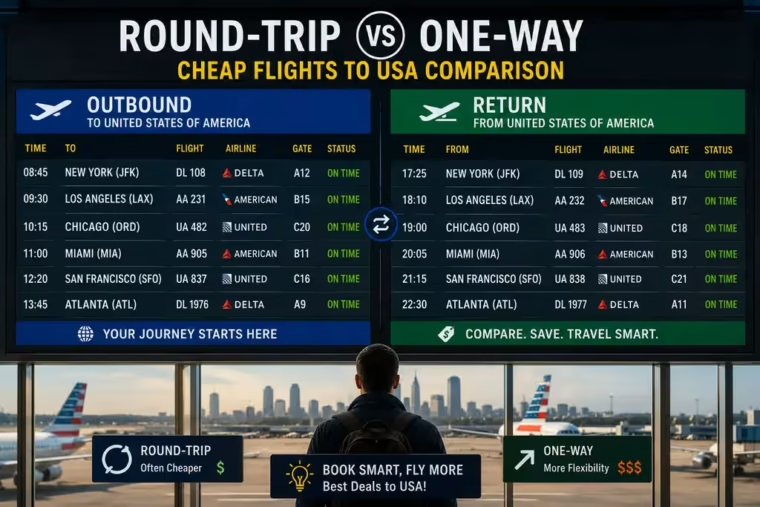
Two travelers book the same US trip. One pays for a round-trip ticket. The other books two one-ways. Same dates, same cities, different final price.
That gap isn’t random. Airlines price round-trip and one-way tickets using entirely different rules, and knowing which rule applies to your trip is how you land genuinely cheap flights to USA, instead of guessing and hoping.
Here’s how the math actually works, and which format wins for different kinds of trips.
Why the Pricing Isn’t the Same
Legacy carriers often price a one-way ticket at more than half the round-trip fare, sometimes close to the full round-trip price. That’s built into how their fare buckets work, not a glitch.
Budget carriers do the opposite. Southwest, Frontier, and Spirit generally price each direction on its own, so a one-way costs roughly half of what a round-trip would.
That single difference is why the “which is cheaper” answer depends entirely on who you’re flying, not just where you’re going, and it’s the first thing to check before you assume you’ve found cheap flights to USA.
When Round-Trip Wins
Round-trip usually wins when your dates are fixed, and you’re flying the same airline both directions.
It also wins with legacy carriers on international routes, where round-trip fares often unlock pricing that a matching pair of one-ways can’t touch. A search through flights to United States destinations makes that gap easy to spot once you compare both options on the same screen.
Pro Tip: If you’re flying a legacy carrier internationally, price the round-trip first. Only break it into two one-ways if the combined price actually comes in lower; don’t assume it will.
When One-Way Wins
One-way pricing pulls ahead in a few specific situations.
Multi-city trips are the clearest case. Flying into New York and out of Miami means a round-trip ticket won’t even work; you need two one-ways regardless of price, so comparing carriers on each leg separately matters more here.
Mixing airlines is another. Say a budget carrier has a flash sale on your outbound date, but a different airline is cheaper for the return. Booking two separate one-ways lets you grab both deals instead of settling for one airline’s round-trip price. This kind of side-by-side approach is exactly what a guide like usa flights cheap walks through in more detail.
Common Mistake to Avoid: Assuming a round-trip is always cheaper because it feels like “one booking.” On budget carriers especially, run both numbers before you commit; the one-way total often wins.
Quick Comparison
Use this as a shortcut whenever you’re weighing formats on a route to figure out which one actually counts as cheap flights to USA for your specific trip.
| Scenario | Better Choice | Why |
|---|---|---|
| Fixed dates, same airline both ways | Round-trip | Legacy carriers reward matched itineraries |
| Flying into one city, out of another | One-way (x2) | Round-trip tickets can’t cover multi-city routes |
| Budget carrier, flexible dates | One-way (x2) | Prices are split evenly, so mixing sale dates helps |
| Uncertain return date | One-way | Avoids losing a prepaid return if plans change |
| International legacy carrier route | Round-trip | Fare rules often penalize one-way international bookings |
The Rule Nobody Mentions: Proof of Onward Travel
Here’s the part most fare comparisons skip. International travelers entering the US on a one-way ticket under the Visa Waiver Program can be asked to show proof of onward or return travel at check-in or on arrival.
Skip that proof, and an airline can deny boarding entirely, no matter how good the one-way fare looked. It’s worth checking current entry requirements before booking a one-way international ticket into the US.
Pro Tip: If you’re booking one-way internationally, keep a refundable placeholder return booked until your onward plans are locked in. It’s cheap insurance against being turned away at the gate.
A Real-World Example
A traveler flying Chicago to Atlanta, then onward to Orlando a week later, priced it as one round-trip first; the total came in high because the return leg didn’t line up with the airline’s cheapest fare bucket. Rebuilding the trip as two separate one-ways, comparing cheap flights to Atlanta USA against a direct Orlando search, brought the total down by comparing each leg on its own terms instead of forcing one round-trip price to cover both. That kind of leg-by-leg comparison is exactly what Abordia is built to run before you book. Heading to the coast after? Pricing that separately through cheap flights to Florida USA often beats folding it into one itinerary.
Frequently Asked Questions
No. Legacy carriers often favor round-trip pricing, but budget carriers usually split fares evenly, making two one-ways competitive or cheaper.
Book one-ways for multi-city trips, when mixing airlines for better per-leg pricing, or when your return date isn’t fixed yet.
They can. Some countries require proof of onward or return travel before boarding, especially under visa waiver entry rules.
Budget carriers like Southwest, Frontier, and Spirit typically price each direction independently, unlike many legacy international carriers.
Yes. Booking a round-trip for one leg and a separate one-way for a schedule change or extra stop is a common way to control cost without losing flexibility.
Ready to compare both formats side by side? Run your route on Abordia and see which format actually wins for your trip.
