
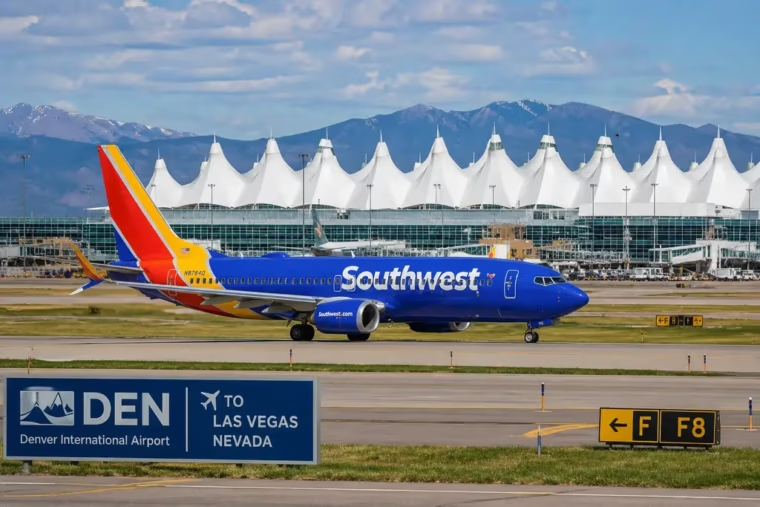
If you’re planning to take flights from Denver Colorado to Las Vegas Nevada, you’ve picked one of the most well-served short-haul routes in the American West. Multiple airlines compete for this corridor, flight times are short, and both airports are well-equipped for the volume they handle. But the sheer number of options from different carriers, departure times, and fare classes can make a simple trip decision feel more complicated than it needs to be.
Denver and Las Vegas sit roughly 750 miles apart. By car, you’re looking at 11 hours across Colorado and Utah. By plane, you’re wheels-down in about two hours. That time difference alone makes air travel the clear choice for most people on this route.
This guide covers what actually matters before you book: which airlines fly it, how long the flight takes, what each airport is like to navigate, and how to pick the departure time that works best for your schedule and budget.
Airlines That Fly from Denver to Las Vegas
Four carriers cover the bulk of traffic on this route, and they operate very differently from each other.
Southwest Airlines
Southwest is the carrier that many travelers overlook because it doesn’t appear on aggregator sites like Google Flights, Expedia, or Aborida. You have to check southwest.com directly, which many people don’t bother to do, which is a mistake.
Southwest allows two free checked bags, charges no change or cancellation fees, and typically offers multiple daily departures. Their “Wanna Get Away” fares are the discounted tier to look for. If you’re traveling with luggage or have any chance of a schedule change, Southwest’s total value is often better than it first appears.
United Airlines
United operates this route out of its Denver hub. Being based at DEN means more flight options and generally reliable scheduling. Their basic economy fares don’t include carry-on bags in the overhead bin, so read the fine print before booking the cheapest United fare you see. Full economy and above include standard carry-on allowance.
Frontier Airlines
Frontier is also based in Denver, and they run frequent service to Las Vegas, sometimes with very low base fares. The trade-off is that nearly everything beyond your seat costs extra: carry-on bags, checked bags, seat selection, and even printing your boarding pass at the airport. Budget the add-ons before you assume their lowest advertised fare is actually the cheapest option.
Spirit Airlines
Spirit follows a similar ultra-low-cost model to Frontier. Their base fares can look remarkable on paper. A traveler flying with just a small personal item that fits under the seat can genuinely find Spirit to be the cheapest option. Anyone bringing more than that should calculate the full cost, including bag fees, before booking.
When comparing airline tickets from Denver to Las Vegas, always look at what’s included in the fare, not just the headline price.
How Long Is the Flight from Denver to Las Vegas?
Nonstop service from Denver International Airport (DEN) to Harry Reid International Airport (LAS) runs approximately 1 hour 50 minutes to 2 hours 10 minutes, depending on winds and routing.
The flight path runs southwest over Colorado and Utah. On clear days, passengers on the left side of the plane often see the Colorado Rockies early in the flight and red rock formations over Utah before descent into the Las Vegas valley.
Connecting flights are available but rarely make sense on this route. Adding a layover turns a two-hour trip into five or six hours. Unless the price difference is dramatic, a direct flight is the better call here and usually not hard to find.
Choosing the Right Departure Time
Morning Flights Are More Reliable
The first two or three departures of the day out of Denver have the lowest delay rates on average. Delays cascade throughout the day; a morning departure starts fresh with no backlog from earlier flights. If schedule reliability matters to you, a 6–9 a.m. departure from DEN is your best bet.
Afternoon Departures Offer More Flexibility
If you’re not rushing, afternoon flights give you time to get to the airport without a pre-dawn wake-up. Denver weather can be unpredictable in winter. Afternoon flights leave a buffer if you need to dig out or deal with road delays.
Late Evening Arrivals in Las Vegas
Plenty of travelers book late departures specifically to land in Vegas after dark, skip the afternoon heat, and go straight to the hotel or Strip. This works well in summer when a 3 p.m. arrival means stepping into 105°F heat. An 8 p.m. arrival is far more comfortable.
For guidance on the cheapest departure days and times, see: Best Time to Book Denver to Las Vegas Flights
Navigating Denver International Airport (DEN)
Denver International is one of the busier airports in the U.S., and its layout trips up travelers who haven’t been there before.
The main terminal, Jeppesen Terminal, handles ticketing and check-in. From there, an underground rail system connects to three concourses: A, B, and C. Southwest operates out of Concourse C. United, Frontier, and Spirit typically use Concourses A and B. Check your boarding pass for the concourse before you arrive at the terminal.
Security lines at DEN can be slow during peak morning hours (6–9 a.m.) and afternoon waves (3–6 p.m.). TSA PreCheck lanes at DEN are consistently faster. Give yourself at least 90 minutes before departure if you’re checking bags, 60 minutes if you’re carry-on only, and familiar with the airport.
Parking at DEN is expensive for multi-day trips. Economy lots run $10–$13 per day; the closer garage lots run $18–$26. Rideshare drop-off at DEN uses a dedicated level. Follow the signs to Level 5 of the Jeppesen Terminal for pickup and drop-off.
Navigating Harry Reid International Airport (LAS)
Las Vegas’s main airport sits about 5 miles southeast of the Strip. The airport serves over 50 million passengers a year, and the volume shows that baggage claim can back up significantly when multiple wide-body flights arrive at the same time.
Getting to the Strip from LAS:
- Rideshare: 10–20 minutes, typically $12–$20 depending on traffic and destination
- Taxi: Available at the ground transportation area; metered fares to the Strip run $15–$25
- RTC Bus: The 108 bus connects the airport to the Strip for $2, slow but cheap
- Hotel shuttles: Some Strip properties offer free or low-cost shuttles; check with your hotel
The airport has two terminals, labeled Terminal 1 and Terminal 3. Southwest operates from Terminal 1. United, Frontier, and Spirit use Terminal 3. The terminals are not connected airside if you’re connecting to another flight on a different carrier (unlikely on this route, but possible), factor in time to exit security and re-enter.
For tips on whether a lower-priced ticket is actually the better deal once you account for ground transport and fees, see: Why Cheap Flights Aren’t Always Best to Buy
Baggage Allowances by Airline
This is where budget travelers often get burned. Here’s a quick breakdown of what to expect:
Southwest: Two free checked bags (up to 50 lbs each), one free carry-on, one free personal item. No bag fees are a genuine differentiator on this route.
United (Basic Economy): No carry-on bag in the overhead bin, personal item only. Upgrading to full economy adds the carry-on.
Frontier: Personal item free. Carry-on and checked bags cost extra fees that vary depending on when you purchase (cheaper online in advance, more expensive at the airport).
Spirit: Same model as Frontier. Personal item under the seat is free; everything else costs extra.
Before booking a flight ticket from Denver to Las Vegas, check the airline’s current baggage fee page. Fees change, and the difference between buying a bag online versus at the gate can be $30–$50.
For a broader look at timing your purchase right, see: Best Time to Buy Plane Tickets
Frequently Asked Questions
A nonstop flight from Denver International Airport (DEN) to Harry Reid International Airport (LAS) takes approximately 1 hour 50 minutes to 2 hours 10 minutes. Flight time can vary slightly depending on wind patterns and routing. It’s one of the shorter routes in the Western U.S. roughly the same time as a long drive across Colorado, minus 9 hours.
Southwest, United, Frontier, and Spirit all operate direct (nonstop) service between Denver and Las Vegas. Southwest has the most included amenities two free checked bags and no change fees. Frontier and Spirit offer lower base fares but charge extra for bags and seat selection. United sits in the middle with a hub-based scheduling advantage from Denver.
Southwest Airlines operates from Terminal 1 at Harry Reid International Airport (LAS). United, Frontier, and Spirit use Terminal 3. The two terminals are not connected airside, so if you’re arriving on one carrier and departing on another, you’ll need to exit security, transfer between terminals, and go through security again. For single-airline itineraries on this route, this doesn’t apply.
Weekdays specifically Tuesday and Wednesday tend to have lower fares on this route. Friday afternoon and Sunday evening flights carry a significant premium because they’re the peak times for weekend Vegas travelers flying out of Denver. If your schedule allows flexibility, shifting your departure by one day can reduce your fare by $40–$80.
Harry Reid International Airport is approximately 5 miles from the center of the Las Vegas Strip. A rideshare takes 10–20 minutes and costs $12–$20 depending on traffic and your hotel’s location.
